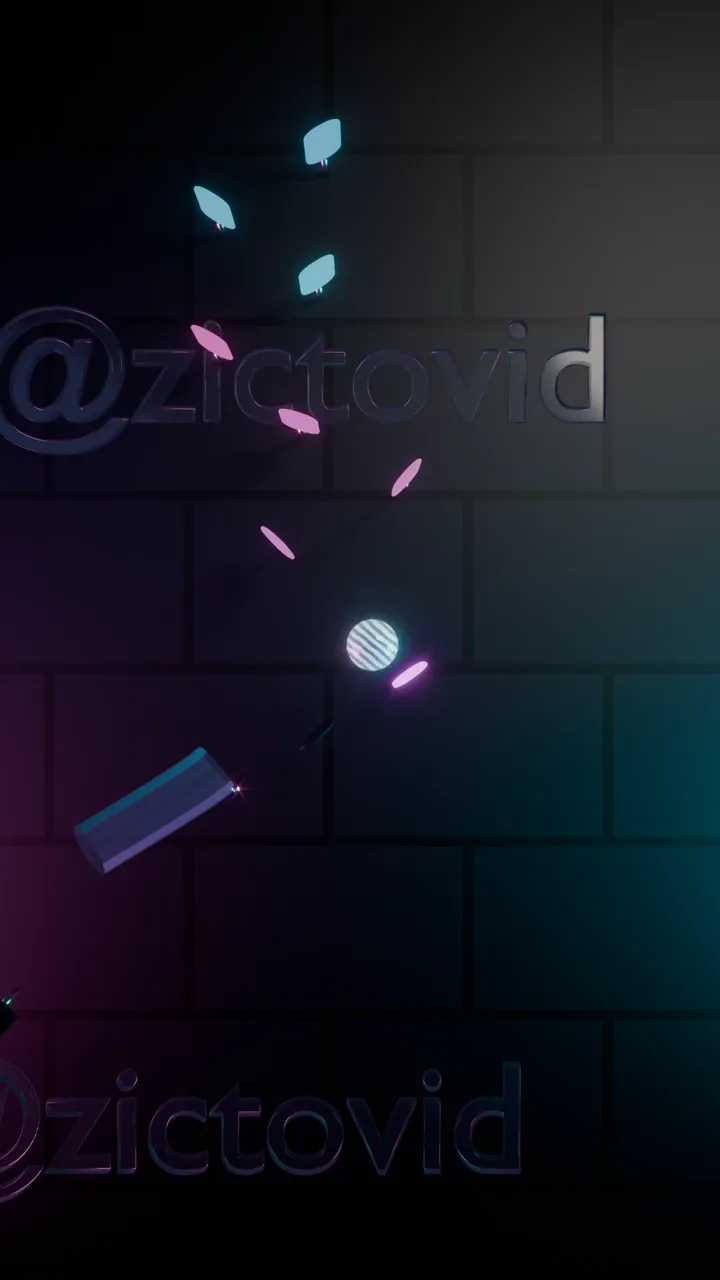
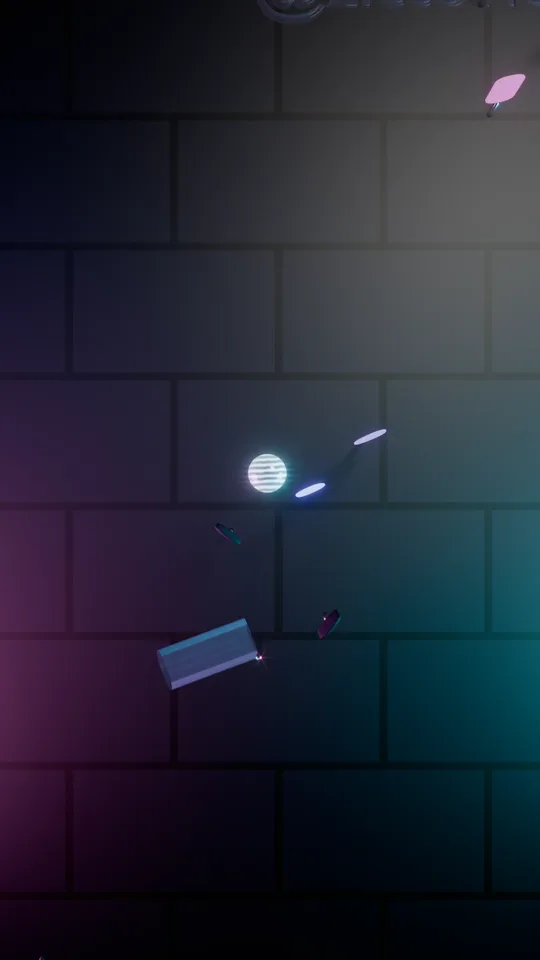
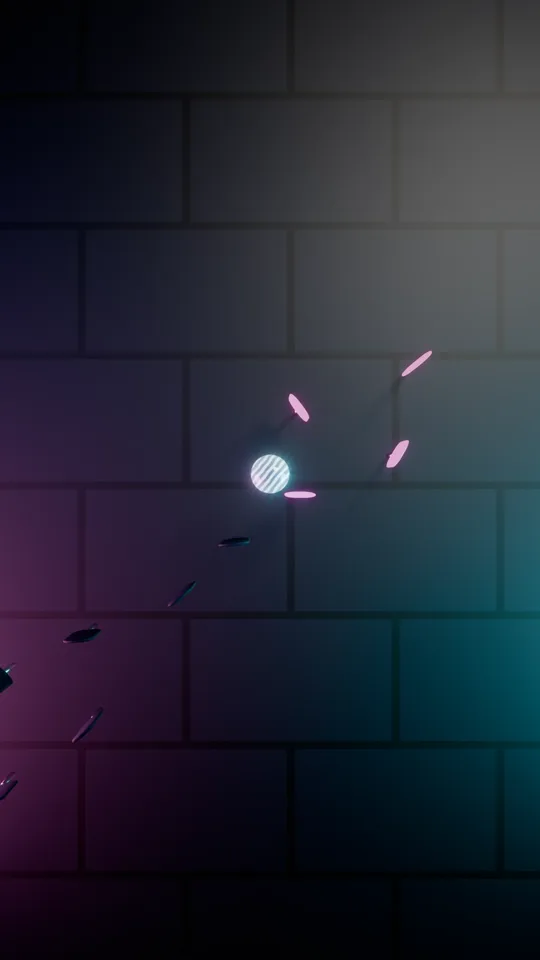
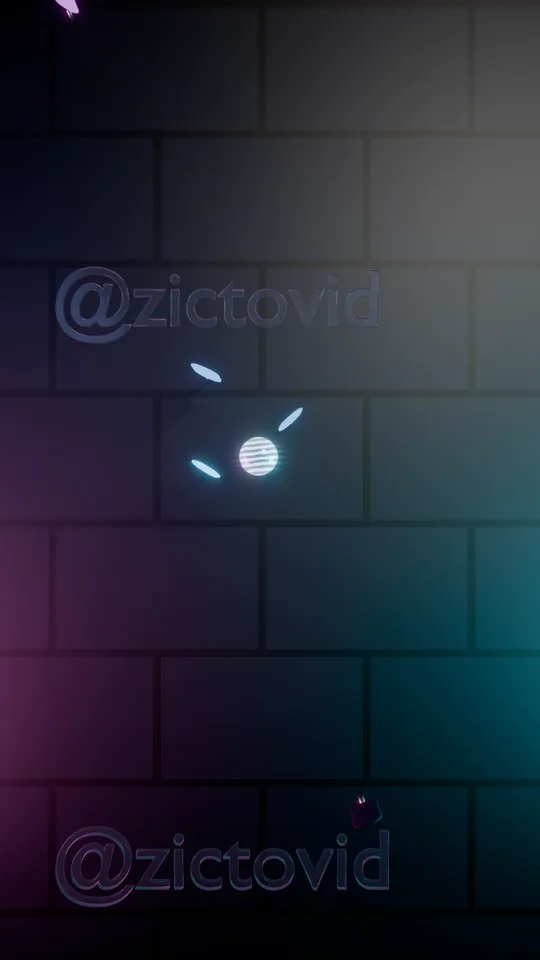
We listen to the track
The analysis picks up onsets band by band — lows, mids, highs — and turns them into a map of beats.
Drop a track. Zictovid turns it into a vertical 3D video where every bounce hits exactly on the beat. 1080×1920, 60 fps, ready for TikTok.
Simulating a ball and hoping it lands on the beat does not work: the moment of contact depends on the time step, and nothing constrains it. Zictovid starts from the beat times and derives the geometry of the level from them. The trajectory is solved backwards.
The analysis picks up onsets band by band — lows, mids, highs — and turns them into a map of beats.
Each beat is snapped to the nearest frame, then the parabola between two impacts is solved in closed form. No simulation.
Platforms land where the ball passes, the 3D scene is built, the render comes out natively vertical.
The maximum error is half a frame — 8.3 ms at 60 fps. The threshold of perception sits around 20 ms.
Same track, same video. The engine uses no unseeded randomness and no physics iteration.
A heavy kick throws the ball high, a hi-hat gives a small bounce. Beat strength drives the height.
1080×1920 at 60 fps, the format of TikTok, Reels and Shorts. No cropping, no black bars.
No unlimited plan: one video takes minutes of graphics card, and promising infinity would be lying. You know exactly what you are buying.
Try it out. No card needed.
For posting every week.
For a channel that ships.
The ball hits dead on the beat. You see it straight away, and that is what holds your eye.
The same track gives back exactly the same video. For iterating on an edit, that changes everything.
The vertical format is native: nothing to crop before posting.
The engine does not simulate a ball and hope it lands on the beat. It starts from the beat times found in the track, snaps each one to the nearest frame, then solves the parabola between two impacts in closed form. The geometry of the level is derived from the trajectory, not the other way round. The maximum error is therefore half a frame — 8.3 ms at 60 fps, below the threshold of perception, which sits around 20 ms.
Yes, to the bit. The engine uses no unseeded randomness and no physics iteration: the same input bytes produce the same video. That is what lets you iterate on an edit without watching the sync shift between renders.
An MP3 or a WAV, up to 40 MB. The accepted length depends on the plan: 30 seconds on the free plan, up to 180 seconds on the widest one. It is the length, more than the number of videos, that bounds a plan — rendering is paid by the GPU-second.
1080×1920 at 60 frames per second, natively vertical — the format of TikTok, Reels and Shorts. Nothing to crop before posting, no black bars.
Yes: 3 videos per month, 30 seconds max, with the zictovid watermark, and no card required. The Creator plan, at €24 per month, goes up to 30 videos and removes the forced watermark.
Because one video burns real minutes of graphics card. Promising infinity would mean either lying, or quietly throttling the first heavy user. A published quota says exactly what you are buying.
The video is yours, with no restriction on our side. You do remain responsible for the rights to the music you upload: a commercial track stays subject to the rules of whichever platform you post on. Zictovid provides no music licence.
No. Everything happens in the browser: you drop a track, the render runs on our machines, you collect an MP4. No editing software, no graphics card on your side.